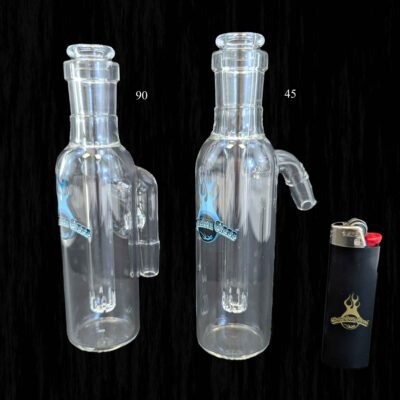
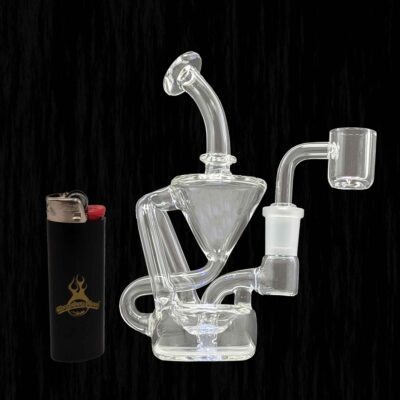
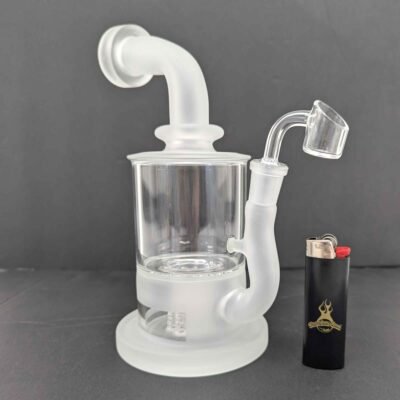
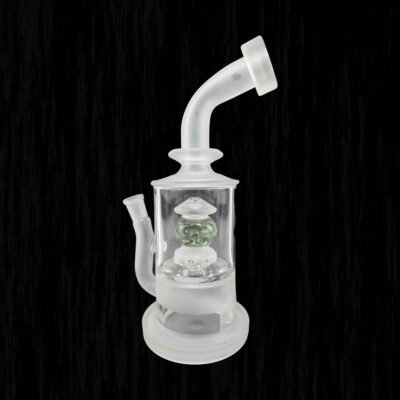
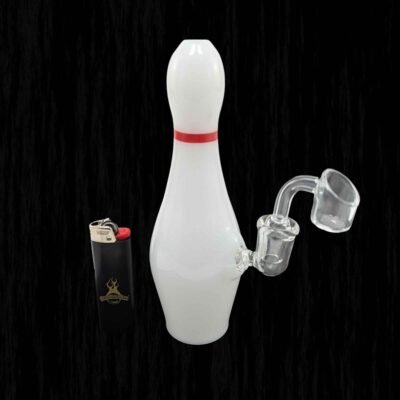
Why Choose a Glass Rig?
Glass rigs can appeal to shoppers who are looking for a specialized water-filtered glass design rather than a general-purpose water pipe.
One of the defining characteristics of the category is the attention given to compatibility and configuration.
A rig's:
- Joint
- Chamber
- Filtration
- Dimensions
- Base
- Accessories
- Overall glass construction
can all influence the design.
Glass also provides considerable freedom for artistic development.
A functional rig can incorporate colored glass, patterns, sculptural details, unusual shapes, and other decorative techniques while maintaining its underlying functional structure.
This makes glass rigs relevant to both shoppers focused on configuration and collectors interested in distinctive handmade glass.
Glass Rig Components
Understanding the basic components can make it easier to compare different rigs.
Joint
The joint is one of the most important considerations when selecting a rig.
Joint size and configuration determine compatibility with the relevant accessories.
Always check the product specifications for the exact joint dimensions before purchasing compatible components.
Chamber
The chamber forms an important part of the rig's water-filtered design.
Different rigs can have different chamber sizes, shapes, and configurations.
Some designs are relatively compact, while others use more substantial chambers or additional structures.
Filtration
Filtration configuration can vary significantly between glass rigs.
Some designs use simpler water-filtering structures, while others incorporate additional glass components.
If filtration is an important consideration, review the specific product description to understand the configuration of the rig you are considering.
Base
The base contributes to the overall stability and proportions of the rig.
Different designs can use different base shapes and dimensions.
When comparing rigs, consider how the base interacts with the overall height and shape of the piece.
Accessories and Compatibility
A rig may be designed around particular accessories or replacement components.
Compatibility should therefore be checked before purchasing additional components.
The correct joint size and configuration are particularly important.
What to Look for When Choosing a Glass Rig
Choosing a glass rig involves more than selecting a shape you like.
1. Check the Joint Size
The joint is one of the first specifications to check.
Different rigs can use different joint sizes and configurations, so make sure any accessory you intend to use is compatible.
2. Consider Overall Dimensions
Look at the height, width, chamber dimensions, and overall footprint.
Photographs can make products appear larger or smaller than they actually are, so always refer to the listed dimensions.
3. Examine the Chamber Configuration
Consider how the water chamber is integrated into the overall design.
Different chamber shapes can give rigs substantially different appearances and proportions.
4. Compare Filtration
If filtration configuration matters to you, compare the specific filtration structures used by different products.
Don't assume that every rig uses the same design.
5. Consider Stability
Look at the base and overall proportions of the piece.
A stable configuration can be particularly important when considering where the rig will be stored and how it will be handled.
6. Consider Cleaning Access
More complex glass rigs can contain additional chambers and internal structures.
Consider whether the design provides reasonable access for cleaning and maintenance.
7. Look at the Glasswork
Finally, consider the visual character of the piece.
Handmade glass can incorporate different colors, patterns, shaping, and decorative elements.
Chameleon Glass offers distinctive handmade designs alongside more traditional glass forms.
Glass Rigs vs. Glass Bongs
Glass rigs and glass bongs can appear similar because both can incorporate water filtration.
However, they represent different categories and can be designed around different configurations.
A glass bong is generally a broader water-pipe category, while a rig is typically a more specialized glass piece designed around a particular joint and accessory configuration.
The specific construction matters more than the terminology alone.
When comparing the two, look at:
- Joint configuration
- Chamber design
- Filtration
- Dimensions
- Accessories
- Intended configuration
- Overall construction
Individual products can vary, so the product specifications should always take priority.
Glass Rigs vs. Glass Bubblers
A bubbler generally emphasizes a compact water-pipe form.
A rig can also be compact, but its design is more closely associated with its specialized joint and accessory configuration.
Bubblers can therefore be a useful alternative for shoppers primarily interested in compact water-pipe designs, while rigs may be more appropriate for shoppers specifically looking for a specialized configuration.
Again, individual designs can overlap, making product specifications important when comparing categories.
Glass Rigs and Handmade Glass Design
Glass provides artists with significant freedom when designing rigs.
A functional glass rig can be developed in many different ways without losing the fundamental characteristics of the category.
Glassmakers can work with:
- Different chamber shapes
- Different joint configurations
- Colored glass
- Clear glass
- Decorative patterns
- Sculptural elements
- Curved sections
- Different base designs
- Various filtration structures
This means two rigs can share similar functional characteristics while having completely different visual identities.
For collectors, handmade glasswork can be an important part of choosing a specific rig.
Chameleon Glass combines functional design with original American glassmaking, bringing this approach to the rig category.
Caring for a Glass Rig
Glass rigs should be handled and stored carefully.
Place the rig on a stable surface and protect it from accidental impacts.
Pay particular attention to joints, stems, chambers, and other areas where the glass may have a more complex shape.
If the rig includes removable components, handle those components carefully when assembling or cleaning the piece.
Regular maintenance can help keep the glass in good condition. Follow the care instructions associated with the individual product.
More elaborate rigs may contain additional internal structures that require greater attention during cleaning.
Avoid sudden temperature changes that could place unnecessary stress on the glass.
Because rig designs vary, product-specific care instructions should take priority whenever they are available.
Glass Rig Accessories and Compatibility
Compatibility is particularly important within the rig category.
Before purchasing an accessory or replacement component, verify:
- Joint size
- Joint configuration
- Component dimensions
- Product compatibility
- Any manufacturer-specific requirements
A component that looks similar may not necessarily be compatible with a particular rig.
Chameleon Glass's broader collection includes compatible glass accessories and replacement components, giving shoppers the opportunity to explore related products alongside the rig category.
Always check the individual product description for exact compatibility information.
Why Choose Chameleon Glass Rigs?
Chameleon Glass brings its broader history of American glass manufacturing and original glass design to the rig category.
The brand has developed a range of traditional and original glass products, allowing shoppers to explore different approaches to functional glassmaking.
Its rigs form part of a broader ecosystem that includes related glass products, accessories, and replacement components.
This makes it possible to explore a rig alongside compatible products rather than viewing the category in isolation.
For shoppers, the collection provides opportunities to compare different:
- Rig shapes
- Chamber configurations
- Joint specifications
- Filtration designs
- Sizes
- Glasswork
- Decorative treatments
- Compatible components
What Makes Chameleon Glass Different?
Chameleon Glass combines American glass manufacturing, functional design, original product development, and distinctive handmade glasswork.
The company has a long history in glass manufacturing, with its glassmaking history dating back to 1991.
Its collection includes both traditional and original glass products, allowing shoppers to explore familiar formats alongside distinctive designs.
The rig collection reflects this broader approach.
Rather than treating a rig simply as a generic water-filtered glass piece, shoppers can compare different configurations and glassmaking styles while also exploring related accessories and replacement components.
This combination of functional design, compatibility-focused products, American glassmaking, and original glasswork is an important part of what distinguishes Chameleon Glass.
Exploring Related Glass Categories
If you're researching glass rigs, it can also be useful to explore related categories.
Glass Bongs
Bongs are a broader water-pipe category with different chamber sizes, bases, and filtration configurations.
Glass Bubblers
Bubblers generally offer a more compact water-pipe format.
Glass Hand Pipes
Hand pipes are compact glass pieces that generally don't incorporate an integrated water chamber.
Glass Pipes
The broader glass pipe category includes multiple traditional and original glass designs.
Exploring related categories can help you determine which combination of size, configuration, filtration, and glasswork best matches your preferences.
Frequently Asked Questions About Glass Rigs
What is a glass rig?
A glass rig is a specialized water-filtered glass piece designed around a particular joint and accessory configuration. Individual rigs can vary considerably in size, chamber design, filtration, and overall construction.
What should I check before buying a glass rig?
Check the joint size, compatibility, overall dimensions, chamber configuration, filtration design, stability, glass construction, and maintenance requirements.
Why is joint size important on a glass rig?
Joint size affects compatibility with accessories and replacement components. Always check the specific product specifications before purchasing compatible parts.
Are all glass rigs the same size?
No. Glass rigs can vary significantly in height, chamber size, base dimensions, and overall footprint.
How is a glass rig different from a bong?
A bong is generally a broader water-pipe category, while a rig is typically a more specialized glass piece built around a particular joint and accessory configuration. Individual designs can overlap.
How is a glass rig different from a bubbler?
Bubblers generally emphasize a compact water-pipe format, while rigs are more specifically associated with specialized joint and accessory configurations.
Are Chameleon Glass rigs American-made?
Chameleon Glass identifies its manufacturing as American-made. Individual product pages should be checked for product-specific manufacturing details.
Are Chameleon Glass rigs handmade?
Chameleon Glass produces handmade American glass products. Check individual listings for specific construction and manufacturing information.
How do I maintain a glass rig?
Handle and store the rig carefully, clean it according to the product's care recommendations, and pay particular attention to joints, chambers, and other delicate components.
What makes a handmade glass rig different?
Handmade glass allows artists to vary shape, color, chamber design, decorative elements, proportions, and glasswork, giving individual rigs a distinctive appearance.
What's the difference between a rig and a regular bong?
A rig uses a nail or banger for concentrates instead of a bowl for flower — otherwise the water-filtration mechanism works similarly.
What else do I need besides the rig itself?
A nail or banger, a dabber tool, and a torch at minimum — a carb cap is a common add-on for better airflow control during the dab.
Should I get a quartz or titanium nail?
Quartz is generally preferred for flavor; titanium is more durable for frequent, heavy use. Many people start with quartz and add titanium later.